
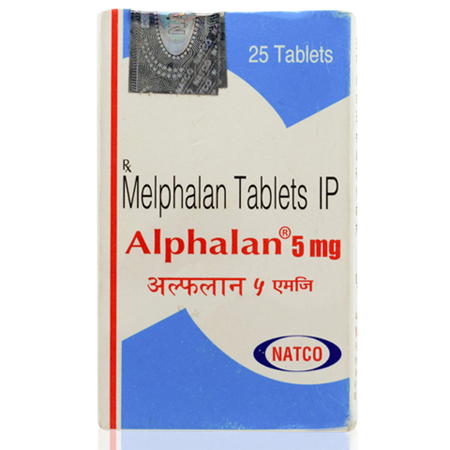
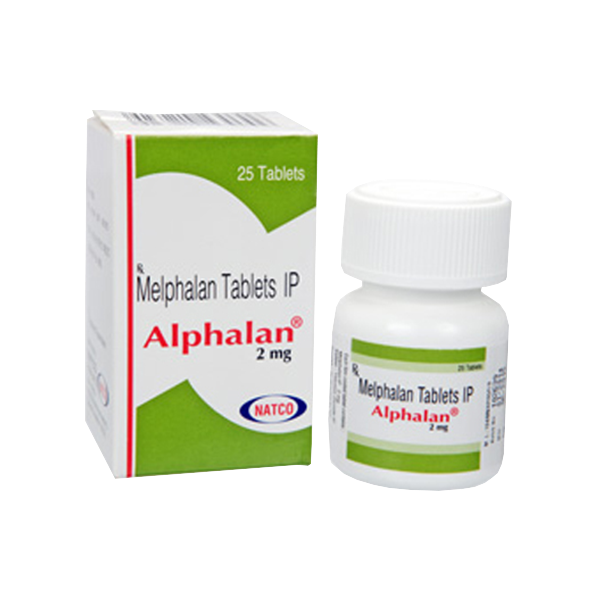
Alphalan 2mg Tablet 25'S
$ 60.30
Description Introduction What ALPHALAN 2MG is used for? It is used to treat cancers such as: Multiple myeloma (develops from cells in the bone marrow called plasma cells) Advanced cancer of the ovaries and breast cancer Polycythemia vera (disease which increases the number of red cells in your blood) Warning & Precautions Talk to Doctor Talk to your doctor before you take this medicine, if you: Are allergic or hypersensitive to any of the other ingredients of this medicine Have or had radiotherapy or chemotherapy Have a kidney problem Pregnancy & Breast Feeding If you are pregnant or breastfeeding, think you may be pregnant or are planning to have a baby, ask your doctor for advice before taking this medicine Interactions Tell your doctor if you are taking, Other cytotoxic drugs (chemotherapy) Nalidixic acid (used to treat urinary tract infections) Ciclosporin (used to prevent rejection of organs or tissues following a transplant or to treat certain skin conditions like psoriasis and eczema or to treat rheumatoid arthritis) How to Use Always take this medicine exactly as your doctor has told you Swallow your medicine whole with a glass of water Do not break, crush or chew the medicine If you take more ALPHALAN 2MG If you take more than the prescribed dose, tell your doctor or go to a nearest hospital straight away If you forget to take ALPHALAN 2MG Do not take a double dose to make up for a forgotten dose If you stop taking ALPHALAN 2MG Do not stop taking this medicine unless your doctor tells you to do so Side Effects Like all medicines, this medicine can cause side effects, although not everybody gets them Serious Allergic reaction: rash, lumps or hives on the skin, swollen face, eyelids or lips, sudden wheeziness and tightness of the chest, collapse (cardiac arrest) Signs of fever or infection (sore throat, sore mouth or urinary problems) Unexpected bruising or bleeding or feeling extremely tired, dizzy or breathless Suddenly feel unwell (even with a normal temperature) Common A drop in the number of blood cells and platelets Nausea, vomiting, diarrhoea In high doses: mouth ulcers, hair loss High levels of urea in your blood (kidney problem who are being treated for myeloma) Rare Illness (low number of red blood cells) Cough or wheeze, difficult to breathe Jaundice (yellowing of the whites of eyes and skin) Mouth ulcers Skin rashes or itching skin Leukemia In women: periods stopping More Information Storage Keep this medicine out of reach of children Store in a refrigerator at 2-8ºC FAQs Q. Is Alphalan a vesicant (irritant)? Alphalan is not a vesicant but an anti-cancer drug Q. How is Alphalan given? Alphalan is given by oral or intravenous route; dosing varies by purpose and route of administration as well as patient weight Q. Does Alphalan cause hair loss/ neuropathy/ liver damage? Alphalan causes hair loss as one of the side effects. but cause for liver damage and neuropathy is not known Q. How does Alphalan work/ how does Alphalan kill cancer cells? Alphalan belongs to class of drugs called alkylating agents. It works by stopping or slowing the growth of cancer cells in your body. Disclaimer: The contents of this website are for informational purposes only and not intended to be a substitute for professional medical advice, diagnosis, or treatment. Please seek the advice of a physician or other qualified health provider with any questions you may have regarding a medical condition. Do not disregard professional medical advice or delay in seeking it because of something you have read on this website.
You may also like…
-
 On Sale
 -
 On Sale
Related products
-
On Sale
-
On Sale
